 Français
 English
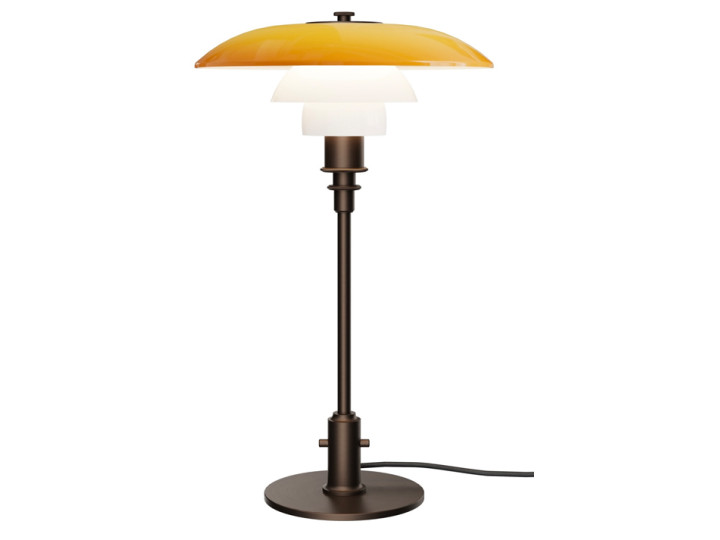
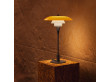
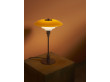
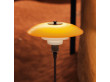
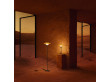
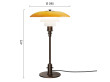
Mid-Century modern scandinavian table lamp PH 3/2 Centenary limited edition 2026
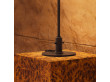
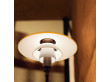
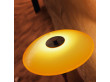
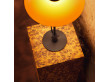
HERITAGE DESIGN The combination of the amber-coloured upper and opal white lower shade set of the PH Centenary Table and Floor lamp is a classic heritage PH design element, seen on vintage PH lamps. The amber upper shade is a four layered glass with a white inner side, therebyproviding both a very warm and ambient upward light to the surroundings while maintaining a white downward directed light. The frames are crafted in aged brass, and the cords come with brown fabric to emphasize the vintage look and feel.
| Year | 1926 |
| Dimensions | H : 47,2 cm. Shade Ø : 29 cm. Base Ø : 15,5 cm. Cable length : 2,1 m. |
| Material | Top shade: Mouth-blown four layered amber-coloured glass with white inner side. Lower shades: Mouth-blown three-layered white opal glass. Glossy on the outside, sandblasted on the inside. Aged brass brushed with fine hairlines, lacquered. |
| Style | Classique Neuf |
| Origin | Denmark |
| Fournisseur | Louis Poulsen |
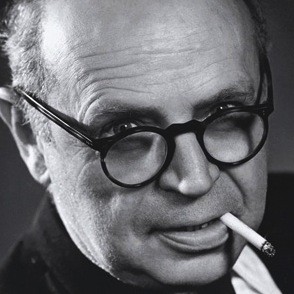
Poul Henningsen
Denmark (1894-1967)
Danish architect Poul Henningsen, known by his initials, PH was obsessed with light. He is the legendary creator of the lighting series carrying his name. He can be said to be the worlds first lighting architect.
Poul Henningsen devoted his entire career to investigating the importance of light for our well being. He worked on the theory that the observer should not be subjected to direct glare from the electric light source. Henningsen used a series of layered shades to both spread the light and conceal the light bulb, thus creating a softer more diffused lighting. One of Denmark's major figures in 20th-century lighting design, Henningsen was also an independent architect, designer of theatre interiors and tubular steel furniture, critic, and editor of the magazine Kritisk Revy (Critical Review). Highly critical of the widespread lack of imagination in domestic lighting in Copenhagen, Henningsen came to prominence with the first of his multi-shade lamps designed in 1924, setting the pattern for his subsequent lighting work. Known as the Paris Lamp (and later as the PH lamp) it won a competition for a light fitting for the Paris Exposition des Arts Décoratifs et Industriels of 1925, where he was awarded a Gold Medal, and was put into production by the Danish lighting manufacturer Louis Poulsen.
Henningsen's design principles were based on the scientific analysis of the ways in which lampshades distribute light, glare, and reflection. The PH lampshades were composed of a series of separate, interleaved elements that gently diffused the light throughout the space in which it was situated as well as directing it downwards